

When I first started telling people that for our 10-year anniversary, Wes and I were going to take a trip to the North Slope and the Arctic Ocean I got two very different responses. The first response was a very confused look followed by but why? The other response was an excited and intrigued that sounds like such a great adventure!
For context, its important to understand the industry that exists in Alaska. The economy of Alaska is two fold. Half is tourism based. Half is oil and natural resources. There are other industries and facets to the economy in this state, but these two make up a large portion of funding and jobs for people who live here. The industry found on the North Slope and Prudhoe Bay are oil fields. The facilities out of Prudhoe Bay are extensive and maintaining the pipeline provides a lot of important jobs to the Alaskan community.
To understand the first response I got from people, it’s important to know the context of work that happens in Prudhoe Bay and along the pipeline. Many of these jobs require an extensive amount of travel within the state. Many of the jobs in Prudhoe Bay require shifts – 2 weeks of work and 3 weeks off or some variation of time on and off. That means when people are there, they are working. When they are done working, they leave to go home or other places that are not Prudhoe Bay. It’s not considered a nice place to stay or visit or a popular travel destination. Many of the people I have talked to who have worked and traveled frequently for work to the slope describe it as desolate, boring, mosquito-infested, nothing to see, and depressing. I’ve also heard the road to the Arctic Ocean described as terrible, remote, inhospitable, and rough-beyond-measure.
After making the 3-day drive from Fairbanks to Prudhoe Bay (one way), I can confidently say I understand why people feel this way about this area of the word. And yet there was so much more that I didn’t expect to find.
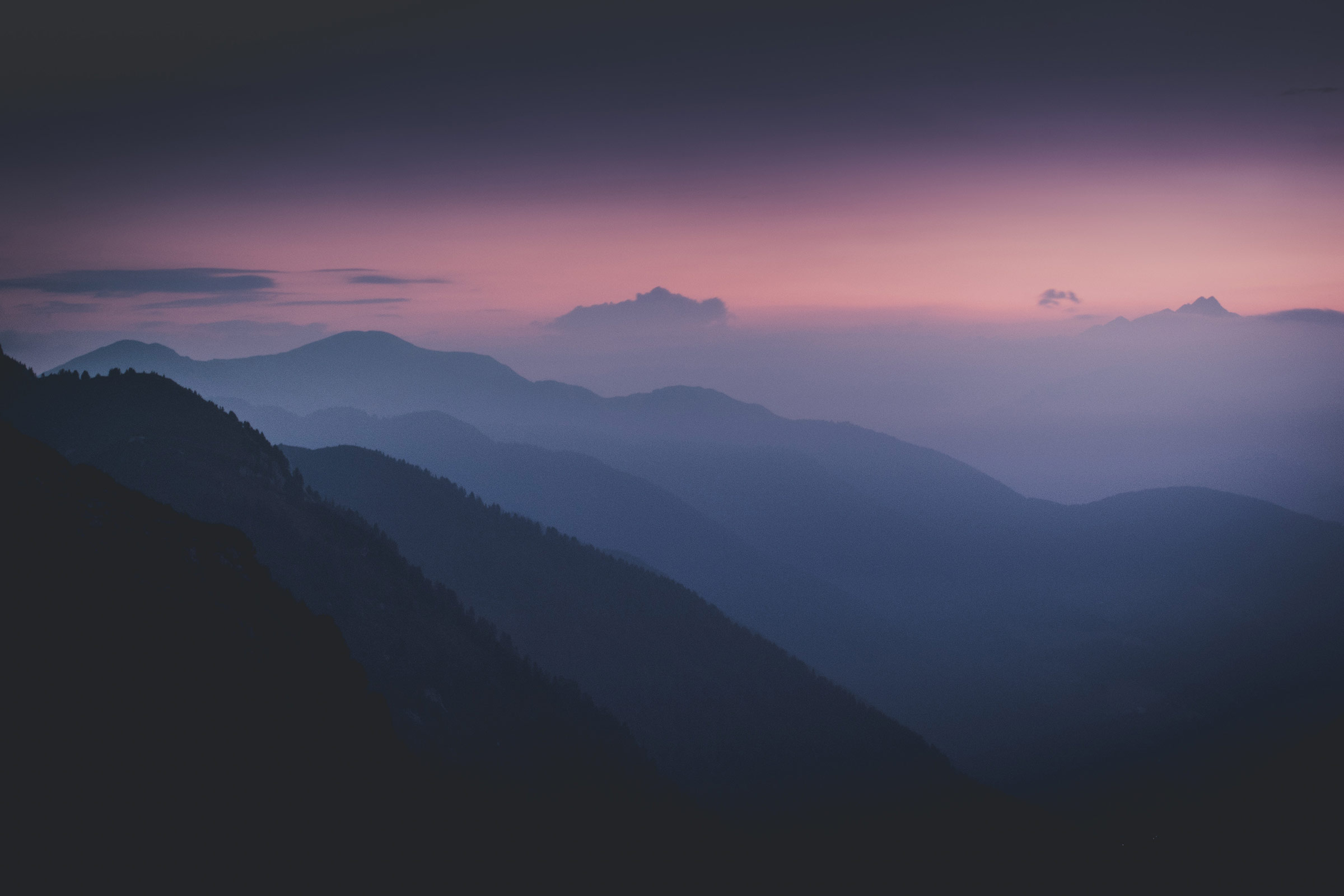
The sky is a gradient of powder blue that bleeds into slate gray before the sun kisses it into a blush of pink, orange, and liquid gold on the horizon. This is one in a series of five otherworldly sunsets I’ve watched this week. The air is clear here. It’s just rained. There is no dust from the dirt road we’ve been traveling for 300 miles. The skyline is nothing but sloping green tundra and mountains turned purplish-blue from the clouds and setting sun. The only sound is the low hum of insects and the soft breeze as it tumbles over the landscape. It’s quiet. It’s one of the most untouched, indescribable places I’ve ever witnessed.


Wes and I chose this trip because we wanted to chase arctic grayling and arctic char as far as we could until we reached the ocean. The information from the Alaska Department of Fish and Game said the species we could encounter were mostly grayling, char, pike, and sheefish. 10 days, a 400 mile stretch of remote road, and opportunities to fish? Absolutely!
The Dalton Highway was built as a service road to allow for the construction of the trans-Alaska oil pipeline in the 1970s. To this day the pipeline is still considered an engineering marvel. It travels 800 miles from Prudhoe Bay on the Artic Ocean to Valdez on the Pacific. As of current records, an estimated 17 billion barrels of oil have moved through the pipeline. This supply is responsible for approximately 13% of the nations oil production.
What started as a road for industry and pipeline access in 1974, the Dalton Highway fully opened up to the public in 1994. To a small contingent of travelers, the highway has since become its own adventure and a means to access the remote wilderness of the Brooks Range and Gates of the Arctic National Park. It also completes the Pan-American highway and an estimated 19,000 mile stretch of road connecting Prudhoe Bay, Alaska to Ushuaia, Argentina. All of this is important because the people traveling this road are doing so because of their close connection to some aspect of its history and access.
Iridescent colors sparkle in the water. Teal, green, orange, and purple fan out in my palm. I’m holding the rainbow in my fingers. These are undoubtably some of the most beautiful fish I’ve ever caught. This is the fourth fish of the day for my partner and I, and I can’t be more grateful for this journey into the wild.
Arctic grayling are special in Alaska. They are often bigger and have deeper colors than those found in Montana, and usually they are eager to eat just about anything. Many fishing guides consider grayling a by-catch. The thing their clients can catch when they’re not targeting salmon, rainbow trout, or dolly varden. This trip above the arctic circle, my partner and I are making these beautiful fish the center piece. These freshwater sail fish are why we are here, and they are not disappointing us.
Everything above the arctic circle can happen in extremes. Extreme cold, wind, bug life, and weather patterns. It makes sense that the fish who live here are the same way. As soon as the ice is thawed from the rivers and lakes and the days are warmer, everything goes into a frenzy of growth and sustenance. Plants push out their summer foliage as soon as they can to catch the sun for as long as they can. Fish and wildlife feed and consume as much as they can as quickly as they can because the season of abundance is short. Because of this the grayling here are slower to grow than anywhere else. The season for abundant food is shorter. And when a species already has a slow growth rate, it makes seeing those bigger fish above the 66th parallel even more special. In truth though, every single one of them was a privilege to witness.


Fishing our way north, we were able to witness a small drop of the expansiveness that is the Brooks Range and Gates of the Arctic National Park. At every turn we were greeted by mountains and valleys bigger than the imagination can comprehend. Swaths of trees blanketing the valleys and reaching up the mountain sides until the oxygen and annual snow fall made it impossible for them to reach any higher. Glacial moraines of rock and boulders bigger than mansions stretching out from ice caps as if the earth had been broken open to expose it’s bones. Alpine tundra that turns to arctic tundra as fields of nothing but green stretch lazily from the rocky outcropping of mountains, then bunch and expand to encompass everything as far as the eye can see and farther beyond the horizon. The green only interrupted by pools of crystal water that has been filtered through the brush and rock until it’s gin clear and cold. Of all of the things I was told about life above the arctic circle, I didn’t expect to witness this much vibrancy and so much vitality.
My partner and I spent three days in this suspended state of awe and wonder at the world as we took our time driving north. Every turn was another expansive horizon that our cameras futilely tried to capture. Eventually, I gave up entirely because anything I looked at on my camera was only a miniscule fraction of what I was witnessing. Of all of the things I expected from this journey, I didn’t expect the child-like sense of wonder and awe I felt during those three days camping in the wilderness and traveling the road.
50 miles outside of Prudhoe Bay, the dirt road turns to well manicured pavement and the atmosphere of the journey changed. The child-like sense of wonder that I had felt for the previous 365 miles morphed abruptly to frustration as mile after mile the seemingly pristine tundra became littered with signs of industry. Plastic and synthetic coverings that had blown off of trucks or from the town were tangled in the grasslands. Debris from vehicles ill-fated or simply traveling through, littered the sides of the road. Wheels, pieces of bumpers, bolts, broken metal and steel, plastic, synthetic mesh, wire, broken straps, and frayed rope. All left behind in a wilderness as if pieces of breadcrumbs leading to the town at the end of the road.
That frustration quickly turned to sadness and a deep sense of loss as our truck brought us into Prudhoe Bay. This wasn’t like coming into a town in the middle of the wilderness, where there are homes. This was coming from the expansive wilderness and into a place of industry with larger than life machines of iron, purpose built barracks for workers, unpaved road, work trucks, cargo trucks, and the energy of a thousand factories. In stark contrast to these conditions, there were hundreds of migratory birds in the ponds and on the marsh. Caribou passing through the outskirts of the town with oil rigs reaching up to the sky behind them. Musk Ox grazing on the banks of the river with barracks and dirt road shouldering their way through the tundra and marsh. There is life here, but it is fighting so hard to remain in a place that has clearly and irrevocably been changed.
We camped the night on the outskirts of town on the Sagavanirktok river and took a guided tour to the shores of the Arctic ocean the next day before we made our way south. The timber and driftwood on these shores is from the Mackenzie River in the Northwest Territories of Canada, traveling over 600 miles until it makes it here. The migratory birds that summer here travel even further with over 200 species making this region their home.


It has never been more difficult for me to witness so much life and hope existing with so much destruction and despair.
We didn’t stay long in Prudhoe Bay, and we took our time traveling south into warmer weather. We followed the pipeline and the road and saw it a little differently than we did on our way north. Unbeknownst to us at the time, we talked each other through the five stages of grief as we traveled. We got a little bit more of that child-like wonder back with each new turn and horizon. We made it back to civilization and eventually home without any catastrophic events and fueled by energy drinks and gas station snacks. It was a journey I would do again with the hopes to take a flight into the Brooks Range to stay longer. To have the privilege to witness and sink into the vastness of the mountains and feel small from the expansiveness of the landscape. I am privileged to have witnessed the sun set over the tundra. I am hopeful this place will be remain long after we have gone.
You must be logged in to post a comment.